Hair Loss due to Stress

Hair Loss Due to Stress: What You Need to Know

Hair loss can be distressing for anyone, especially when the cause seems invisible. One of the most common triggers of shedding is stress. But does stress cause hair loss, and if so, can it be reversed? Understanding the connection between stress and hair loss is crucial for managing it effectively and restoring healthy hair growth.

At Aneels Hair Transplant, we provide world-class hair restoration services under the guidance of Dr. Aneel Riaz Batalvi (M.B.B.S, M.R.C.S), a Diplomate of the American Board of Hair Restoration Surgery (ABHRS). With over 19 years of experience, Dr. Aneel is among Pakistan’s most senior and internationally certified hair restoration surgeons, providing treatments that follow the highest standards set by the International Society of Hair Restoration Surgery (ISHRS).

Does Stress Cause Hair Loss?

Many patients ask: can stress cause hair loss? Scientific research confirms that prolonged physical or emotional stress can trigger hair shedding. Stress affects the hair growth cycle by pushing more hairs into the telogen (resting) phase, which causes increased shedding several weeks or months later.

This type of shedding is known as telogen effluvium, and it can affect both men and women. It is often temporary, but if stress continues or is severe, hair loss can become more noticeable.

How Stress Leads to Hair Loss

Stress can influence hair health in multiple ways:

  1. Hormonal Imbalance, Stress increases cortisol levels, which can weaken hair follicles and shorten the growth phase.
  2. Inflammation, Chronic stress can cause inflammation in the scalp, affecting follicular health.
  3. Nutritional Deficiencies, Stress often affects appetite or nutrient absorption, leading to deficiencies in iron, zinc, and vitamins essential for hair growth.
  4. Triggering Underlying Conditions, Conditions such as autoimmune disorders can be worsened by stress, accelerating hair loss.

Understanding these mechanisms helps answer why some people notice significant hair shedding during stressful periods, also referred to as hair loss when stressed.

Signs You May Have Stress-Related Hair Loss

Stress hair loss usually presents differently from genetic baldness. Key signs include:

  • Sudden increase in shedding (more hair on pillow, comb, or shower drain)
  • Diffuse thinning across the scalp rather than patchy bald spots
  • Hair that feels finer or weaker
  • Temporary widening of the part line, especially in women

If you notice these symptoms, it may indicate that stress is contributing to hair loss. Early intervention can significantly improve outcomes.

Could Stress Cause Hair Loss Permanently?

Most stress-induced hair loss is temporary. Hair follicles remain intact, meaning regrowth is possible once stress is reduced. Patients often ask: does hair loss from stress grow back? In most cases, yes. Normal hair growth typically resumes within 3 to 6 months, although recovery can vary depending on individual health and stress levels.

However, chronic stress over long periods can contribute to more persistent thinning and exacerbate genetic predisposition to hair loss.

Hair Loss from Stress vs. Other Types of Hair Loss

Stress hair loss differs from other types:

FeatureStress Hair LossAndrogenetic Hair Loss (Genetic)
PatternDiffuse thinningReceding hairline or crown
SpeedSudden sheddingGradual over years
ReversibilityUsually reversibleOften permanent without treatment
TriggerEmotional or physical stressHormonal/genetic factors

Recognizing the difference helps determine whether lifestyle changes, medical therapy, or hair restoration surgery is the best approach.

How to Stop Hair Loss from Stress

If you are experiencing hair loss due to stress, there are several scientifically supported steps to minimize shedding and encourage regrowth:

1. Manage Stress Levels

  • Practice mindfulness, yoga, or meditation
  • Regular physical exercise
  • Adequate sleep
  • Counseling or therapy for emotional stress

Reducing stress directly supports hair follicle health and can help stop hair loss from stress naturally.

2. Nutritional Support

Eating a nutrient-rich diet helps combat the effects of stress on hair. Key nutrients include:

  • Protein
  • Iron
  • Zinc
  • Biotin and B-vitamins
  • Omega-3 fatty acids

Supplements may be recommended if deficiencies are detected.

3. Medical Therapies

For significant or prolonged hair loss:

  • Minoxidil can stimulate growth in stressed follicles
  • PRP (Platelet-Rich Plasma) therapy strengthens weak follicles and accelerates recovery
  • Low-Level Laser Therapy (LLLT) may improve scalp circulation and follicular activity

How to Regain Hair Loss from Stress

Patients often ask: how to regain hair loss from stress. Recovery usually involves a combination of stress management, proper nutrition, and, in some cases, medical support:

  • Most patients see noticeable regrowth within 3 to 6 months after reducing stress
  • PRP therapy at Aneels Hair Transplant can accelerate results
  • Early consultation with a certified hair restoration surgeon ensures accurate diagnosis and targeted treatment

Dr. Aneel Riaz Batalvi evaluates each case to determine the exact cause of shedding and provides a personalized plan to restore hair naturally.

When to Consult a Hair Restoration Specialist

While most stress-related hair loss regrows naturally, professional consultation is recommended if:

  • Hair shedding persists beyond 6 months
  • Thinning affects self-esteem or confidence
  • You are unsure if the shedding is due to stress, genetics, or another medical condition

At Aneels Hair Transplant, Dr. Aneel Riaz Batalvi uses advanced scalp analysis tools and diagnostic techniques to determine whether hair loss is temporary or if early intervention is needed to prevent permanent thinning.

Permanent Solutions if Stress Accelerates Hair Loss

If stress has contributed to early androgenetic alopecia or follicle miniaturization, hair loss may not fully reverse without surgical intervention. In such cases, hair transplant surgery is the most reliable option.

At Aneels Hair Transplant, Dr. Aneel Riaz Batalvi offers:

  • FUE (Follicular Unit Extraction)
  • FUT (Follicular Unit Transplant)
  • Advanced grafting techniques for natural density
  • Internationally recognized standards via ISHRS certification

Patients benefit from safe, minimally invasive procedures with natural-looking, long-lasting results.

Final Comments

Hair loss due to stress is real, and it affects millions worldwide. While most cases are temporary and hair generally regrows, prolonged or severe stress can exacerbate thinning, especially in genetically predisposed individuals.

Managing stress, maintaining proper nutrition, and seeking early medical evaluation are crucial steps to stop hair loss from stress and restore healthy hair.

At Aneels Hair Transplant, patients receive personalized treatment plans from Dr. Aneel Riaz Batalvi, an ABHRS Diplomate, ensuring both non-surgical and surgical solutions meet international standards. If you are noticing hair loss because of stress, early consultation can protect your hair and restore confidence.
Read more...
Is Hair Loss Reversible

Is Hair Loss Reversible? What Science Says

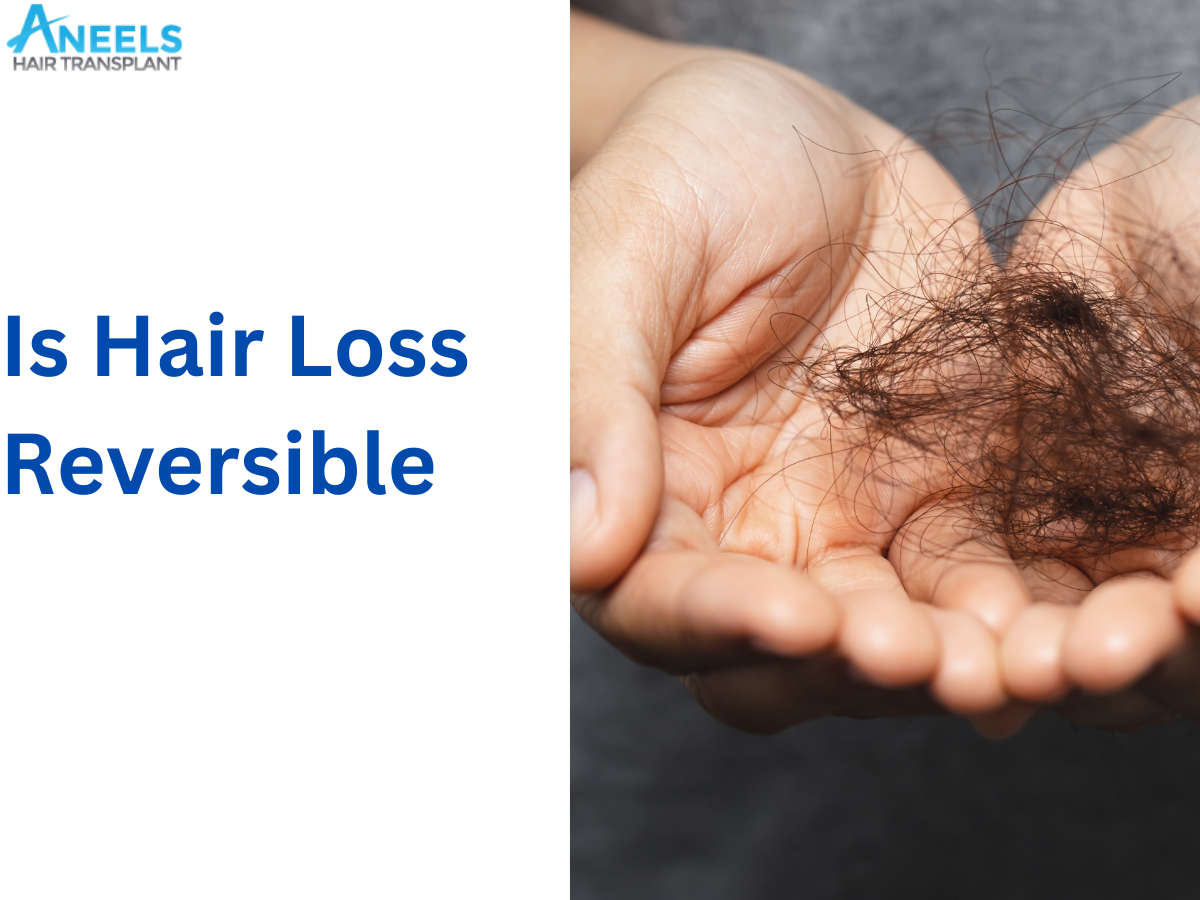
Hair loss is one of the most common concerns among men and women worldwide. From mild shedding to noticeable thinning, many people start searching for answers the moment they see changes in their hair density. But a question everyone asks is: Is hair loss reversible?
The truth is that some types of hair loss are reversible, while others can only be managed not fully reversed. Understanding the difference is essential for choosing the right treatment and preventing further damage.

At Aneels Hair Transplant, under the expertise of Dr. Aneel Riaz Batalvi (M.B.B.S, M.R.C.S) a Diplomate of the American Board of Hair Restoration Surgery (ABHRS) and one of Pakistan’s most senior hair restoration surgeons we focus on accurate diagnosis, science-backed treatments, and internationally certified surgical solutions. This article explores the science behind hair loss reversibility and what real solutions look like.

What are Hair Loss Types

Hair loss can occur for several reasons, and reversibility largely depends on the cause. Broadly, hair loss falls into two categories:

1. Non-scarring (Reversible) Hair Loss

This type does not permanently damage hair follicles, meaning regrowth is possible. Common forms include:

  • Telogen effluvium
  • Nutritional deficiency-induced shedding
  • Hormonal imbalance
  • Early androgenetic alopecia (to a certain degree)
  • Stress-related hair loss
  • Medication side effects

2. Scarring (Permanent) Hair Loss

In these cases, follicles are destroyed and replaced with scar tissue, making regrowth impossible. Examples include:

  • Advanced androgenetic alopecia where follicles have miniaturized completely
  • Traction alopecia (long-term)
  • Lichen planopilaris
  • Cicatricial alopecia

Understanding which category your condition falls into determines whether hair loss is reversible naturally, medically, or only through hair transplant surgery.

Is Hair Loss Reversible? What Science Says

1. Telogen Effluvium, Yes, Often Fully Reversible

Telogen effluvium occurs when stress, illness, childbirth, or nutritional deficiency pushes large numbers of hairs into the resting phase.
Science tells us that once the trigger is removed, the follicles resume normal growth.

Expected recovery time:

  • Mild cases: 3 to 6 months
  • Severe cases: up to 12 months

What helps:

  • Nutrition correction
  • Stress management
  • Supplements (biotin, zinc, Vitamin D, based on tests)
  • PRP therapy for faster regrowth

At Aneels Hair Transplant, patients experiencing chronic telogen effluvium undergo diagnostic testing to identify the underlying cause, allowing targeted treatment.

2. Hormonal Hair Loss, Reversible When Treated Early

Hormones such as thyroid hormones, estrogen, and prolactin significantly influence hair growth cycles.

Conditions like thyroid imbalance or postpartum hair loss can be reversed once hormonal levels normalize.

What helps:

  • Medical treatment for the hormonal disorder
  • Topical therapies like Minoxidil
  • Platelet-rich plasma (PRP)
  • Nutritional optimization

3. Early Androgenetic Alopecia, Reversible to a Degree

Androgenetic alopecia, commonly known as male or female pattern baldness, is partly reversible but only in the early stages.

Science explains this through follicular miniaturization:
DHT causes hair follicles to shrink over time. Before miniaturization reaches the advanced stage, follicles can still respond to treatment.

What helps:

  • Finasteride (men)
  • Minoxidil
  • PRP
  • Low-level laser therapy
  • Anti-androgen medications (women)

But in advanced stages, follicles may stop producing hair entirely. At this point, medical treatment cannot reverse loss, and hair transplant surgery becomes the only solution.

Dr. Aneel Riaz Batalvi’s internationally recognized expertise in hair restoration allows patients to receive precision-based diagnosis and customized regrowth plans depending on the stage of AGA.

4. Alopecia Areata, Sometimes Reversible

Alopecia areata is an autoimmune condition. Science shows many cases resolve on their own, while others require treatment.

Possible treatments:

  • Corticosteroid injections
  • Immunotherapy
  • PRP therapy
  • Topicals like minoxidil

Outcomes vary from person to person, so medical evaluation is essential.

5. Nutritional Deficiencies, Fully Reversible When Corrected

Hair needs adequate levels of:

  • Iron
  • Vitamin D
  • Protein
  • Zinc
  • Biotin

Deficiency-related shedding is almost always reversible, provided supplementation and diet correction are done after proper testing.

When Hair Loss Is NOT Reversible

Certain conditions cause permanent damage:

1. Advanced Androgenetic Alopecia

When follicles have miniaturized completely, regrowth is not scientifically possible.
The only long-term solution is hair transplant surgery.

2. Scarring Alopecias

Burns, injuries, infections, and autoimmune conditions that destroy the follicle result in permanent loss.

3. Long-term Traction Alopecia

Continuous pulling of hair (tight braids, ponytails) over several years can permanently damage follicles.

In such cases, hair transplant surgery performed by a certified surgeon is the most reliable solution.

How a Hair Transplant Helps When Hair Loss Is Irreversible

At Aneels Hair Transplant, Dr. Aneel Riaz Batalvi performs advanced FUE and FUT procedures based on international standards from the International Society of Hair Restoration Surgery (ISHRS).

A transplant works by relocating healthy follicles from the back of the scalp to thinning or bald areas. These follicles are resistant to DHT, so the results are permanent.

Benefits include:

  • Natural hair density
  • Permanent regrowth
  • Safe and minimally invasive procedure
  • Complete restoration of confidence

How to Know if Your Hair Loss Is Reversible

A proper diagnosis includes:

  • Scalp examination
  • Trichoscopy
  • Blood tests for hormones and deficiencies
  • Assessment of miniaturization
  • Medical history review

At Aneels Hair Transplant, every patient receives a personalized consultation to determine whether medical therapy, PRP, or a hair transplant is the right solution.

Science-Backed Ways to Manage and Potentially Reverse Hair Loss

1. Medications

  • Minoxidil: prolongs the growth phase
  • Finasteride: reduces DHT (for men)
  • Spironolactone: anti-androgen (for women)

2. PRP Therapy

Growth factor, rich plasma accelerates regrowth in early-stage thinning and boosts transplant outcomes.

3. Low-Level Laser Therapy

Improves blood flow and cellular metabolism of follicles.

4. Nutritional Support

Adequate protein, iron, omega-3, B12, and Vitamin D levels are crucial.

5. Stress Management

Chronic stress can trigger or worsen shedding.

Can You Reverse Hair Loss?

Yes, some hair loss is reversible, especially when caused by stress, hormones, nutritional issues, or early androgenetic alopecia.
But advanced pattern baldness is not reversible without a hair transplant.

The key is early diagnosis and personalized treatment.

For patients seeking internationally recognized standards of care, Dr. Aneel Riaz Batalvi’s 19+ years of experience, ABHRS certification, and ISHRS endorsement make Aneels Hair Transplant one of the few clinics in Pakistan offering true gold-standard hair restoration solutions.

Read more...
Early Signs of Balding

Early Signs of Balding: How to Know If You’re Losing Hair

Hair loss often begins long before visible bald patches appear. For many individuals, the earliest signs are subtle, slightly wider parting, more shedding than usual, or a gradual thinning you cannot pinpoint. Identifying these early symptoms is crucial because timely intervention can significantly slow the progression of hair loss and improve long-term results, whether you choose medical treatment or a hair transplant.

At Aneels Hair Transplant, all diagnostic evaluations and treatments are led by Dr. Aneel Riaz Batalvi (M.B.B.S, M.R.C.S), a Diplomate of the American Board of Hair Restoration Surgery (ABHRS). With more than 19 years of experience, Dr. Aneel Riaz Batalvi is among the most respected and certified hair restoration surgeons in Pakistan, known for delivering international-standard treatments and accurate diagnoses.

This guide explains the early signs of balding, what they mean, and how you can take action before the condition worsens.

Early Stages of Hair Loss

Most individuals lose between 50 to 100 hairs per day, which is considered normal shedding. Balding begins when hair follicles miniaturize due to genetics, hormonal influences, stress, or underlying medical issues. This miniaturization causes hair to become finer, weaker, and shorter with each growth cycle.

Noticing these subtle signs early on allows you to seek evaluation and treatment options before extensive thinning occurs.

1. Gradual Thinning on the Crown

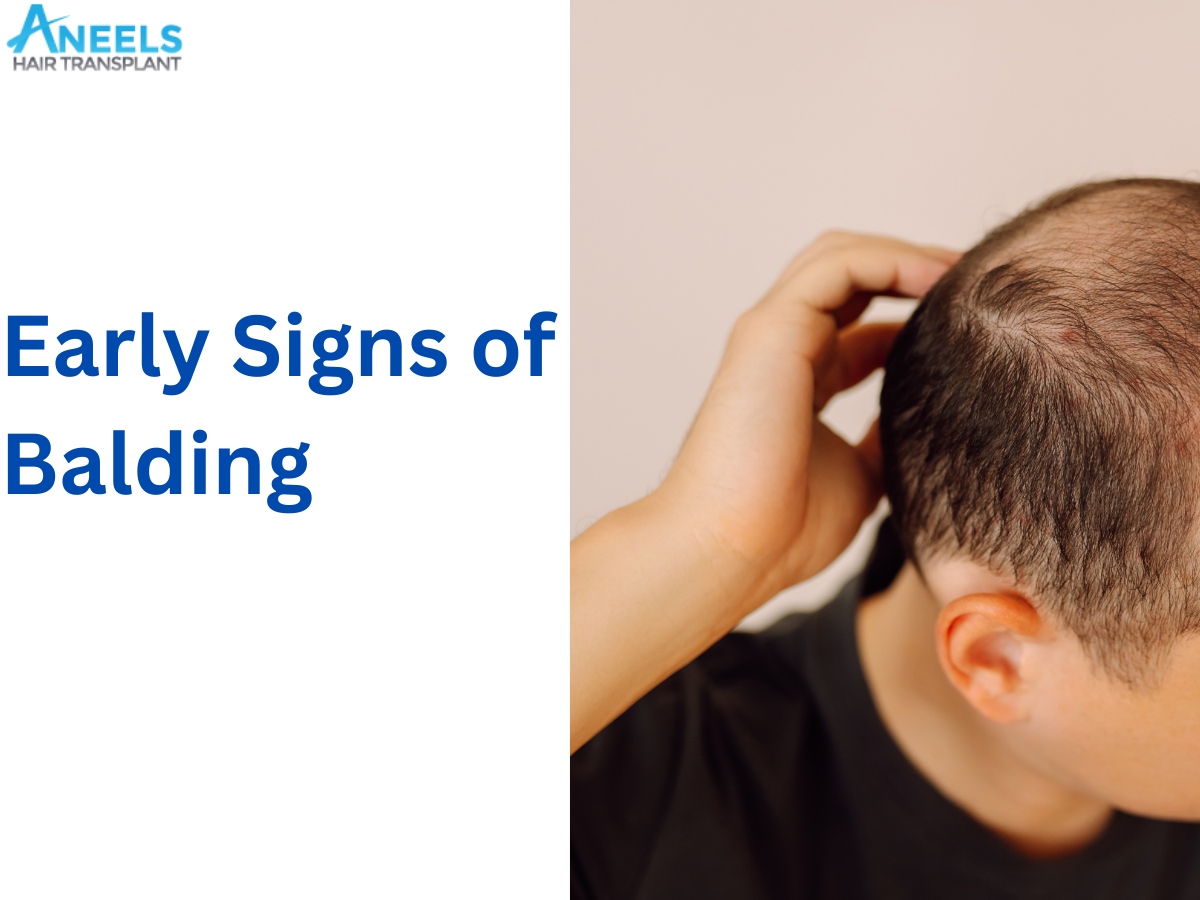
One of the earliest and most common signs of male pattern baldness is thinning at the crown (vertex). The hair becomes less dense, making the scalp more visible under bright light or in photographs.

How to identify it:

  • Compare old pictures with recent ones
  • Use a hand mirror to check the top of your head
  • Look for increased scalp visibility in certain angles

Many individuals overlook crown thinning because it is not visible in the mirror from the front, but it often progresses faster than other areas.

2. Receding Hairline (Especially Around the Temples)

A receding hairline usually starts with temporal thinning, forming an M-shaped pattern. This is a hallmark of androgenetic alopecia in men.

Early indicators include:

  • The hairline slowly moving backward
  • Thinning around the temples
  • Longer forehead appearance

If you notice slight asymmetry or gradual recession, it is advisable to get a professional evaluation.

3. Excessive Shedding During Showering or Combing

While shedding is normal, a sudden increase often indicates early hair loss. You may see:

  • More hair on your pillow
  • Hair accumulating in the shower drain
  • Noticeable strands on your comb or hands

This shedding phase may be temporary due to stress or seasonal change, but consistent excessive shedding is usually a sign of follicular weakening.

4. Increased Scalp Visibility in Bright Lighting

If you feel your scalp is becoming more noticeable under sunlight, camera flash, or bright bathroom lights, it may indicate diffuse thinning.

This type of thinning is common in both men and women and often goes unnoticed until it becomes significant.

5. Miniaturized or Thinner Hair Strands

One of the earliest clinical signs of balding is hair miniaturization. Instead of thick, strong strands, the hair becomes:

  • Finer
  • Shorter
  • Less pigmented

You may notice that your hair lacks volume or feels less dense than before. Miniaturization is a key characteristic of genetic hair loss.

6. Changes in Hair Texture and Growth Speed

If your hair suddenly grows slower, looks weaker, or breaks more easily, the follicles may be entering a shortened growth (anagen) phase.

Other texture changes include:

  • Strands feeling wiry or brittle
  • Loss of natural thickness
  • Increased breakage

These changes often precede visible balding.

7. Widening Part Line (More Common in Women)

For women, early hair loss often starts with a widening of the part line rather than a receding hairline.
The part may appear:

  • Thicker
  • Longer
  • More visible

Female pattern hair loss typically occurs as diffuse thinning, especially around the mid-scalp area.

8. Itching, Irritation, or Scalp Sensitivity

While not always a direct sign of balding, persistent scalp issues can weaken follicles. Conditions such as:

  • Seborrheic dermatitis
  • Psoriasis
  • Folliculitis
  • Dandruff
    may accelerate shedding and contribute to early hair loss.

If scalp irritation occurs alongside thinning, a medical evaluation is recommended.

9. Weak or Slow Regrowth After Hairfall

If fallen hair is not replaced with the same thickness, you are likely experiencing early follicle miniaturization.
Hair may:

  • Take longer to regrow
  • Grow in finer or softer
  • Appear less pigmented

This reduced regrowth capacity is a clear signal of early genetic hair loss.

Why Early Detection Matters

Early balding does not always require surgery. In fact, most patients who come early can stabilize and maintain hair with a combination of:

  • Medical treatments (Minoxidil, Finasteride, etc.)
  • PRP hair therapy
  • Lifestyle modifications
  • Low-level laser therapy

However, if you wait until the hair is severely miniaturized, non-surgical treatments are less effective, and surgical restoration may become the only option.

This is why early diagnosis from a specialist is crucial, especially from an internationally certified hair restoration surgeon.

Expert Diagnosis at Aneels Hair Transplant

At Aneels Hair Transplant, all evaluations are conducted by:

Dr. Aneel Riaz Batalvi (M.B.B.S, M.R.C.S)
ABHRS Diplomate
Full Member, International Society of Hair Restoration Surgery (ISHRS), since 2011

With over 19 years of clinical excellence, Dr. Aneel provides advanced diagnostic assessments including:

  • Digital scalp analysis
  • Hair density measurement
  • Follicular miniaturization assessment
  • Progression predictions
  • Personalized treatment plans

This level of precision allows early detection and targeted intervention, reducing long-term balding progression.

When Should You See a Hair Loss Specialist?

You should consult a specialist early if you experience:

  • Visible thinning in any area
  • A receding hairline
  • Sudden increase in shedding
  • Family history of baldness
  • Thinning at a young age
  • Slow hair growth or texture changes

Early treatment provides the best chance of preserving natural hair.

Treatment Options for Early Balding

Aneels Hair Transplant offers complete hair restoration solutions, including:

1. Medical Therapies

  • Minoxidil
  • Finasteride / Dutasteride (under supervision)
  • Anti-androgen therapy
  • Hair growth supplements

2. PRP (Platelet-Rich Plasma) Therapy

Helps strengthen follicles and slow hair loss.

3. Low-Level Laser Therapy (LLLT)

Improves cellular activity and growth cycles.

4. Advanced FUE & FUT Hair Transplant

Performed exclusively by Dr. Aneel Riaz Batalvi using international safety and quality standards.

Final Comments

Recognizing the early signs of balding can make a significant difference in how effectively you manage and treat hair loss. Whether it begins with a receding hairline, thinning crown, excessive shedding, or changes in hair texture, early detection gives you more options for long-term preservation.

For accurate diagnosis and a personalized treatment plan, Aneels Hair Transplant provides world-class expertise under the leadership of Dr. Aneel Riaz Batalvi, one of the most highly certified and award-winning hair transplant surgeons in Pakistan and internationally.

If you suspect you’re experiencing early signs of balding, taking action today can help you protect your hair tomorrow.

Read more...
Hair Thinning vs Balding

Hair Thinning vs Balding: What’s the Difference?

Hair Thinning vs Balding: What Is Actually Happening to Your Hair?

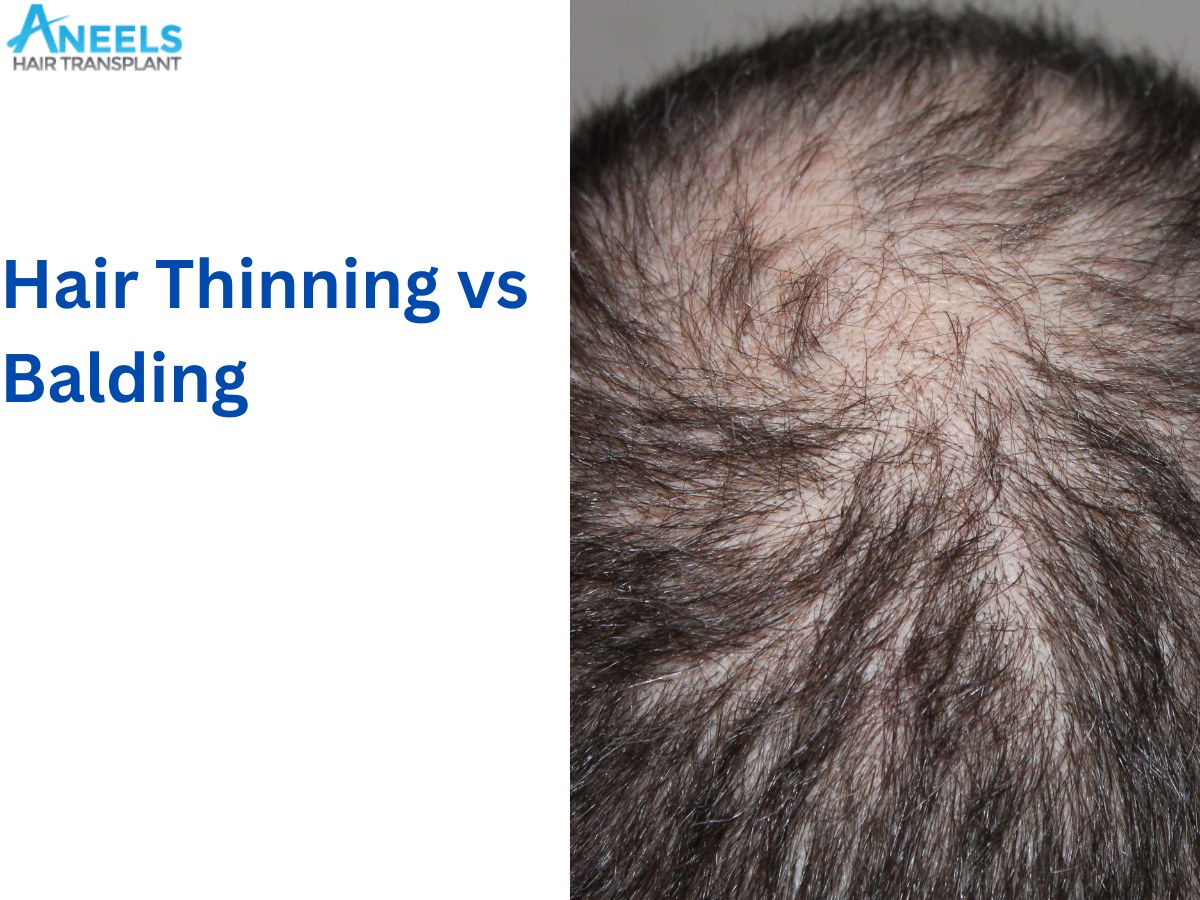
Almost everyone loses some hair every day. But when the strands in your brush start to pile up, one worry takes over: is this just thinning, or am I going bald? The two are related, but they are not the same thing, and knowing the difference matters. Catching the problem at the thinning stage gives you far more options than waiting until you are balding. This guide explains both clearly, in plain language, so you know exactly where you stand.

The Simple Difference

  • Hair thinning means your hair is getting finer and less dense, but the follicles are still alive and producing hair. The strands become weaker, shorter, and lighter over time.
  • Balding means follicles are shrinking and shutting down completely, so hair stops growing in that area altogether. This leaves visible bald patches or a receding line.

Think of it as a spectrum. Thinning usually comes first. If nothing is done, thinning can progress into balding. That is why the thinning stage is your best window to act.

Is It Normal Hair Fall or Something More?

First, do not panic over everyday shedding. It is completely normal to lose 50 to 100 hairs a day, according to dermatology sources. Your hair grows in cycles, and old hairs fall out to make room for new ones.

You should pay attention when you notice:

  • Losing far more than 100 hairs a day, consistently
  • Your scalp becoming more visible through the hair
  • A widening part line
  • A hairline that is creeping backwards
  • Hair that no longer grows as long or thick as before

If several of these are true, you are likely dealing with real thinning, not just normal shedding.

Signs of Hair Thinning

Thinning is subtle and easy to miss at first. Watch for:

  • Less volume. Your ponytail feels thinner, or your usual hairstyle looks flatter.
  • See-through areas. More scalp shows under bright light, especially at the crown or part.
  • Finer strands. Individual hairs feel softer and weaker than they used to.
  • Slower growth. Hair takes longer to reach its old length.

At this stage, the follicles are still working. This is the ideal time for treatments that protect and strengthen them.

Early Signs of Balding

Balding follows a more defined pattern, especially in men. The most common form is male pattern baldness (androgenetic alopecia), which is driven by a hormone called DHT (dihydrotestosterone). DHT slowly shrinks sensitive follicles until they stop producing hair.

Early signs of balding include:

  • A receding hairline, often starting at the temples to form an "M" shape
  • A thinning or bald spot at the crown
  • Clear bald patches where no new hair grows back
  • A visibly changing hairline compared to old photos

Doctors track this using the Norwood Scale, a 7-stage chart that maps male pattern baldness from a mature hairline (stage 1 to 2) to extensive baldness (stage 6 to 7). Women have a different pattern, usually a widening part rather than a receding line, tracked on the Ludwig Scale.

Why the Difference Matters So Much

Here is the key point: your treatment options depend entirely on which stage you are in.

If you are thinning (follicles alive)

You have the most choices, and they are non-surgical: - PRP hair treatment to strengthen weak follicles - Laser hair therapy to stimulate growth - Exosome hair therapy for advanced regeneration - Medication to slow DHT

Starting early can save the hair you have and delay or even prevent balding.

If you are balding (follicles dead)

Once a follicle has shut down, no cream, serum, or injection can bring it back. The only permanent solution is a hair transplant, where healthy follicles from the DHT-resistant donor zone are moved to the bald area. Learn how the leading method works in our FUE hair transplant cost in Lahore guide.

This is why acting during the thinning stage is so valuable. Every follicle you save now is one you will not need to transplant later.

What Causes Thinning and Balding?

Both can be triggered by:

  • Genetics (the biggest cause of pattern baldness)
  • DHT hormone sensitivity
  • Stress and lack of sleep
  • Poor diet and iron or vitamin deficiency
  • Medical conditions like thyroid problems
  • Ageing

Some causes, like stress or diet, can be reversed. Genetic pattern baldness cannot be reversed, but it can be slowed and managed.

A Simple Self-Check

Try this at home:

  1. The photo test. Compare a current photo of your hairline and crown with one from 2 to 3 years ago.
  2. The pull test. Gently pull a small group of hairs. Losing more than a few strands repeatedly may signal active loss.
  3. The light test. Look at your scalp under bright light. How much shows through?

If these raise concern, do not wait. A professional scalp check will tell you exactly which stage you are in.

What to Do Next

The worst thing you can do is ignore it and hope. Hair loss almost never reverses on its own when it is genetic. The earlier you get a proper diagnosis, the more of your hair you can save.

At Aneel's Hair Transplant, a specialist examines your scalp, tells you honestly whether you are thinning or balding, and builds a plan that fits your stage, whether that is a simple non-surgical treatment or a permanent transplant.

👉 Contact us for a free scalp assessment, or explore all our hair restoration services.

Frequently Asked Questions

What is the difference between hair thinning and balding? Thinning means hair is getting finer while follicles are still alive. Balding means follicles have shut down and stopped growing hair, leaving bald areas.

How much hair loss is normal? Losing 50 to 100 hairs a day is normal. Consistently losing more, along with a visible scalp or receding line, points to real hair loss.

Can thinning hair be reversed? Often yes, if follicles are still alive. Treatments like PRP, laser therapy, and medication can strengthen them, especially when started early.

Can balding be reversed? Once follicles are dead, no product can regrow them. A hair transplant is the only permanent way to restore hair in bald areas.

How do I know which stage I am in? Compare old and new photos, check your scalp under bright light, and get a professional scalp assessment for an accurate answer.

Read more...