

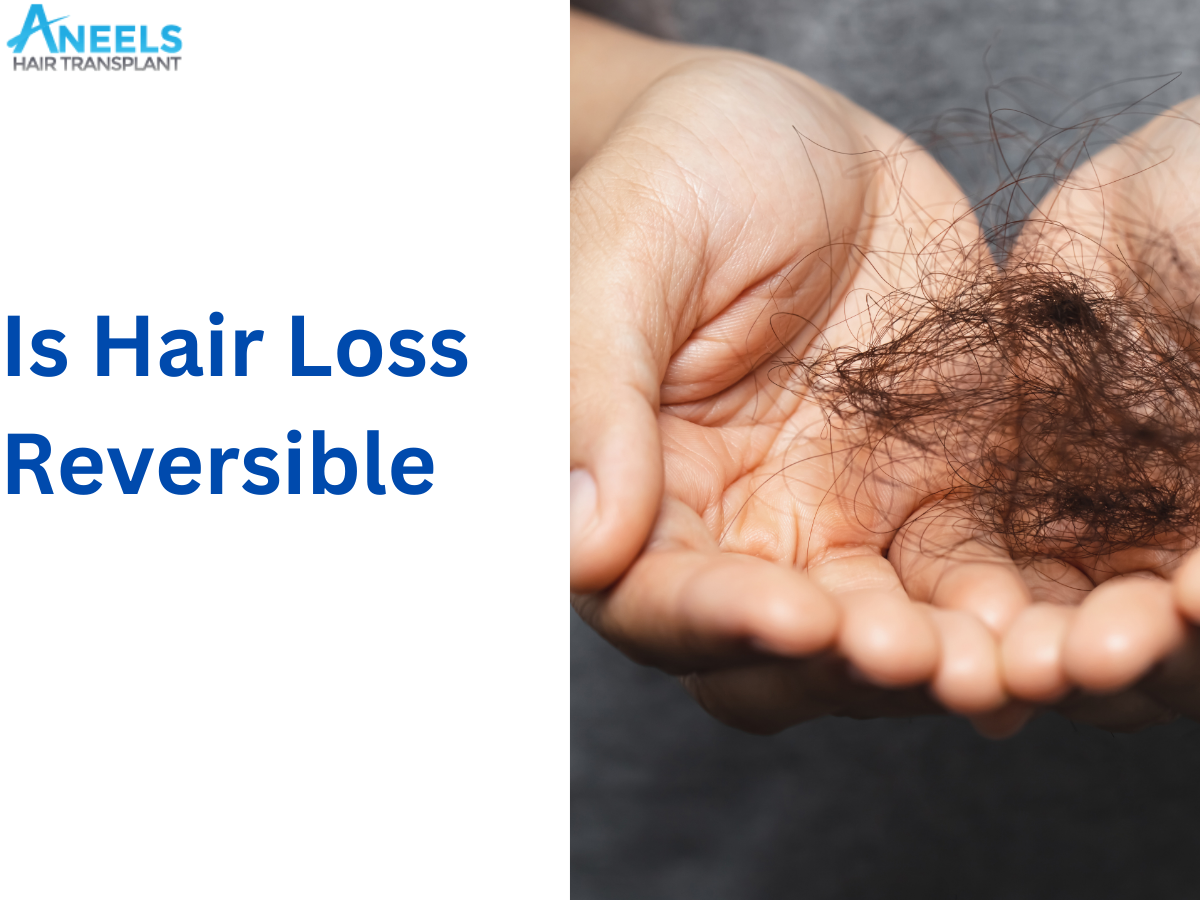
Is Hair Loss Reversible? What Science Says
Hair loss is one of the most common concerns among men and women worldwide. From mild shedding to noticeable thinning, many people start searching for answers the moment they see changes in their hair density. But a question everyone asks is: Is hair loss reversible?
The truth is that some types of hair loss are reversible, while others can only be managed not fully reversed. Understanding the difference is essential for choosing the right treatment and preventing further damage.
At Aneels Hair Transplant, under the expertise of Dr. Aneel Riaz Batalvi (M.B.B.S, M.R.C.S) a Shelly A. Friedman award-winning Diplomat of the American Board of Hair Restoration Surgery (ABHRS) and one of Pakistan’s most senior hair restoration surgeons we focus on accurate diagnosis, science-backed treatments, and internationally certified surgical solutions. This article explores the science behind hair loss reversibility and what real solutions look like.
What are Hair Loss Types
Hair loss can occur for several reasons, and reversibility largely depends on the cause. Broadly, hair loss falls into two categories:
1. Non-scarring (Reversible) Hair Loss
This type does not permanently damage hair follicles, meaning regrowth is possible. Common forms include:
- Telogen effluvium
- Nutritional deficiency-induced shedding
- Hormonal imbalance
- Early androgenetic alopecia (to a certain degree)
- Stress-related hair loss
- Medication side effects
2. Scarring (Permanent) Hair Loss
In these cases, follicles are destroyed and replaced with scar tissue, making regrowth impossible. Examples include:
- Advanced androgenetic alopecia where follicles have miniaturized completely
- Traction alopecia (long-term)
- Lichen planopilaris
- Cicatricial alopecia
Understanding which category your condition falls into determines whether hair loss is reversible naturally, medically, or only through hair transplant surgery.
Is Hair Loss Reversible? What Science Says
1. Telogen Effluvium – Yes, Often Fully Reversible
Telogen effluvium occurs when stress, illness, childbirth, or nutritional deficiency pushes large numbers of hairs into the resting phase.
Science tells us that once the trigger is removed, the follicles resume normal growth.
Expected recovery time:
- Mild cases: 3–6 months
- Severe cases: up to 12 months
What helps:
- Nutrition correction
- Stress management
- Supplements (biotin, zinc, Vitamin D—based on tests)
- PRP therapy for faster regrowth
At Aneels Hair Transplant, patients experiencing chronic telogen effluvium undergo diagnostic testing to identify the underlying cause, allowing targeted treatment.
2. Hormonal Hair Loss – Reversible When Treated Early
Hormones such as thyroid hormones, estrogen, and prolactin significantly influence hair growth cycles.
Conditions like thyroid imbalance or postpartum hair loss can be reversed once hormonal levels normalize.
What helps:
- Medical treatment for the hormonal disorder
- Topical therapies like Minoxidil
- Platelet-rich plasma (PRP)
- Nutritional optimization
3. Early Androgenetic Alopecia – Reversible to a Degree
Androgenetic alopecia, commonly known as male or female pattern baldness, is partly reversible but only in the early stages.
Science explains this through follicular miniaturization:
DHT causes hair follicles to shrink over time. Before miniaturization reaches the advanced stage, follicles can still respond to treatment.
What helps:
- Finasteride (men)
- Minoxidil
- PRP
- Low-level laser therapy
- Anti-androgen medications (women)
But in advanced stages, follicles may stop producing hair entirely. At this point, medical treatment cannot reverse loss, and hair transplant surgery becomes the only solution.
Dr. Aneel Riaz Batalvi’s internationally recognized expertise in hair restoration allows patients to receive precision-based diagnosis and customized regrowth plans depending on the stage of AGA.
4. Alopecia Areata – Sometimes Reversible
Alopecia areata is an autoimmune condition. Science shows many cases resolve on their own, while others require treatment.
Possible treatments:
- Corticosteroid injections
- Immunotherapy
- PRP therapy
- Topicals like minoxidil
Outcomes vary from person to person, so medical evaluation is essential.
5. Nutritional Deficiencies – Fully Reversible When Corrected
Hair needs adequate levels of:
- Iron
- Vitamin D
- Protein
- Zinc
- Biotin
Deficiency-related shedding is almost always reversible, provided supplementation and diet correction are done after proper testing.
When Hair Loss Is NOT Reversible
Certain conditions cause permanent damage:
1. Advanced Androgenetic Alopecia
When follicles have miniaturized completely, regrowth is not scientifically possible.
The only long-term solution is hair transplant surgery.
2. Scarring Alopecias
Burns, injuries, infections, and autoimmune conditions that destroy the follicle result in permanent loss.
3. Long-term Traction Alopecia
Continuous pulling of hair (tight braids, ponytails) over several years can permanently damage follicles.
In such cases, hair transplant surgery performed by a certified surgeon is the most reliable solution.
How a Hair Transplant Helps When Hair Loss Is Irreversible
At Aneels Hair Transplant, Dr. Aneel Riaz Batalvi performs advanced FUE and FUT procedures based on international standards from the International Society of Hair Restoration Surgery (ISHRS).
A transplant works by relocating healthy follicles from the back of the scalp to thinning or bald areas. These follicles are resistant to DHT, so the results are permanent.
Benefits include:
- Natural hair density
- Permanent regrowth
- Safe and minimally invasive procedure
- Complete restoration of confidence
How to Know if Your Hair Loss Is Reversible
A proper diagnosis includes:
- Scalp examination
- Trichoscopy
- Blood tests for hormones and deficiencies
- Assessment of miniaturization
- Medical history review
At Aneels Hair Transplant, every patient receives a personalized consultation to determine whether medical therapy, PRP, or a hair transplant is the right solution.
Science-Backed Ways to Manage and Potentially Reverse Hair Loss
1. Medications
- Minoxidil: prolongs the growth phase
- Finasteride: reduces DHT (for men)
- Spironolactone: anti-androgen (for women)
2. PRP Therapy
Growth factor–rich plasma accelerates regrowth in early-stage thinning and boosts transplant outcomes.
3. Low-Level Laser Therapy
Improves blood flow and cellular metabolism of follicles.
4. Nutritional Support
Adequate protein, iron, omega-3, B12, and Vitamin D levels are crucial.
5. Stress Management
Chronic stress can trigger or worsen shedding.
Can You Reverse Hair Loss?
Yes, some hair loss is reversible, especially when caused by stress, hormones, nutritional issues, or early androgenetic alopecia.
But advanced pattern baldness is not reversible without a hair transplant.
The key is early diagnosis and personalized treatment.
For patients seeking internationally recognized standards of care, Dr. Aneel Riaz Batalvi’s 19+ years of experience, ABHRS certification, and ISHRS endorsement make Aneels Hair Transplant one of the few clinics in Pakistan offering true gold-standard hair restoration solutions.





Customer Reviews
Showing 0 reviews
Thanks for submitting your comment!