

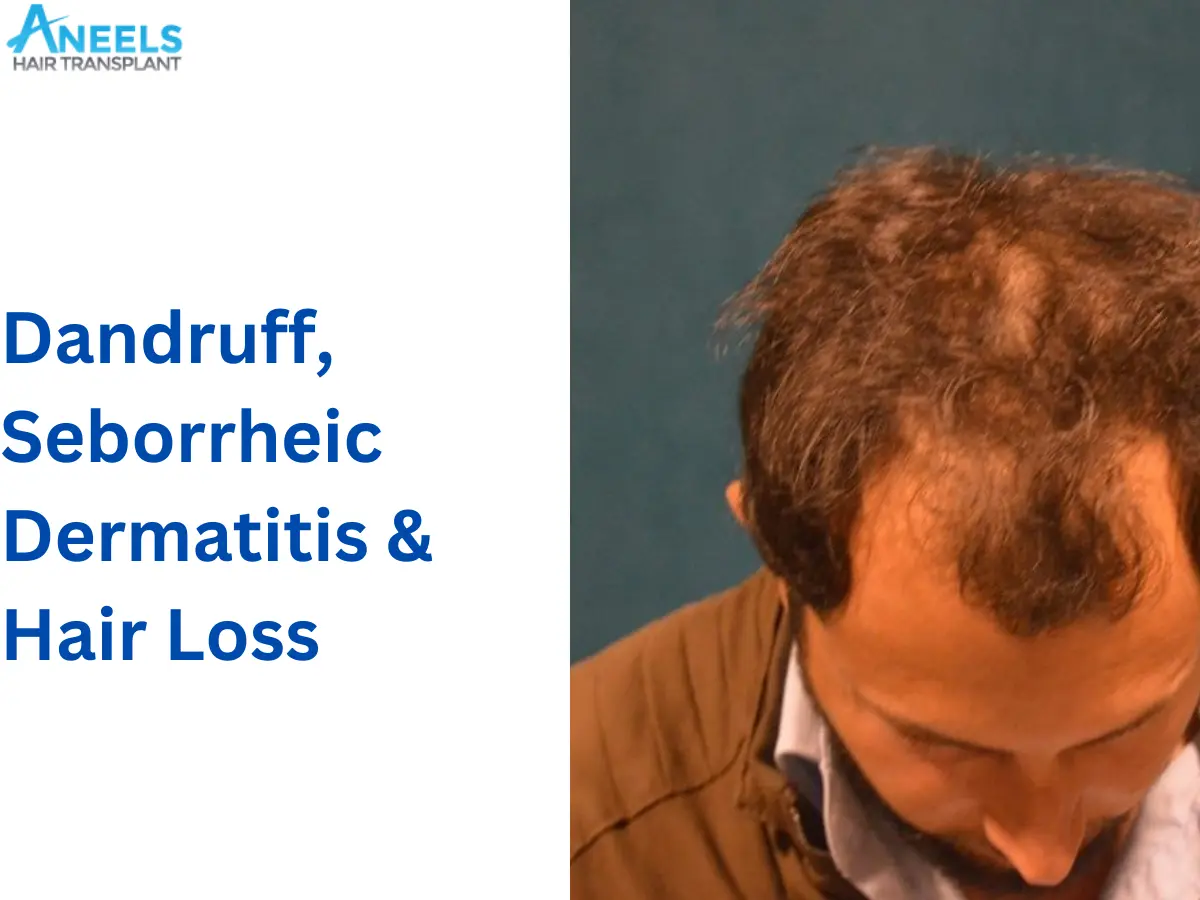
Dandruff, Seborrheic Dermatitis & Hair Loss
Hair loss is a concern for many, and conditions affecting the scalp like dandruff and seborrheic dermatitis often raise questions about their link to thinning hair. Patients commonly ask: can dandruff cause hair loss, or does seborrheic dermatitis contribute to thinning? Understanding these connections helps in managing both scalp health and hair growth.
At Aneels Hair Transplant, patients benefit from the expertise of Dr. Aneel Riaz Batalvi (M.B.B.S, M.R.C.S), a Diplomate of the American Board of Hair Restoration Surgery (ABHRS). With over 19 years of experience, Dr. Aneel is one of Pakistan’s most senior and internationally certified hair restoration surgeons, providing treatments following the International Society of Hair Restoration Surgery (ISHRS) standards. This article explores how dandruff and seborrheic dermatitis relate to hair loss, their causes, and management strategies for healthier hair.
Understanding Dandruff and Seborrheic Dermatitis
1. Dandruff
Dandruff is a common scalp condition characterized by flaking, itching, and dryness. It often results from:
- Excessive scalp oil
- Fungal overgrowth (Malassezia species)
- Stress and poor scalp hygiene
Though dandruff primarily affects appearance and comfort, many wonder if it contributes to hair loss.
2. Seborrheic Dermatitis
Seborrheic dermatitis is a more severe form of dandruff, presenting with red, inflamed, oily patches alongside scaling. It is a chronic inflammatory condition that can affect the scalp, face, and other oily areas of the body.
While seborrheic dermatitis itself does not directly destroy hair follicles, the associated inflammation and scratching can contribute to hair shedding.
Can Dandruff Cause Hair Loss?
Dandruff alone usually does not cause permanent hair loss, but it can lead to temporary shedding in some cases. Here’s how:
- Itching and Scratching, Frequent scratching can weaken hair shafts, leading to breakage.
- Inflammation, Chronic inflammation can affect the scalp environment, potentially disrupting normal hair growth.
- Secondary Infection, Severe or untreated dandruff can cause scalp infections, which may further contribute to hair shedding.
So while dandruff itself doesn’t destroy follicles, it can create conditions that exacerbate hair thinning, especially in those already genetically predisposed.
Does Seborrheic Dermatitis Cause Hair Loss?
Seborrheic dermatitis can contribute to hair loss due to scalp inflammation. Persistent inflammation may:
- Shorten the hair growth cycle
- Cause temporary shedding
- Increase hair breakage due to itching
Fact: Hair usually regrows once the dermatitis is treated effectively. Permanent hair loss is rare unless another underlying cause exists.
Other Factors Connecting Scalp Conditions and Hair Loss
- Genetics, People predisposed to androgenetic alopecia may notice that dandruff or seborrheic dermatitis worsens visible thinning.
- Stress, Both scalp conditions and hair shedding can be triggered or worsened by stress.
- Poor Scalp Health, Excess oil, debris, and inflammation create an unhealthy scalp environment, reducing follicle efficiency.
How to Manage Dandruff and Seborrheic Dermatitis
Effective management of these conditions is key to maintaining hair health. Recommended approaches include:
1. Medicated Shampoos
- Shampoos containing ketoconazole, selenium sulfide, or zinc pyrithione reduce fungal overgrowth and inflammation.
- Regular use prevents recurrence and supports scalp health.
2. Topical Treatments
- Corticosteroid creams or lotions reduce inflammation in seborrheic dermatitis.
- Anti-fungal solutions may also be prescribed for severe cases.
3. Lifestyle Adjustments
- Maintain scalp hygiene without over-washing
- Reduce stress through meditation, exercise, or adequate sleep
- Eat a balanced diet to support scalp and follicle health
4. Avoid Scratching
- Minimizing scratching prevents hair shaft damage and breakage
- Soft scalp massages may relieve itching without harming hair
Hair Loss Treatment in the Presence of Scalp Conditions
If hair shedding continues despite controlling dandruff or seborrheic dermatitis, professional evaluation is recommended. At Aneels Hair Transplant, Dr. Aneel Riaz Batalvi provides:
- Scalp Analysis, To assess follicle health and miniaturization
- PRP Therapy, Stimulates growth in weakened follicles
- Medical Treatments, Such as Minoxidil for persistent thinning
- Hair Transplant Surgery, For advanced cases where follicles are miniaturized or lost
By treating both the scalp condition and hair loss simultaneously, patients achieve the best results in restoring density and health.
Preventing Hair Loss from Scalp Conditions
- Treat dandruff and seborrheic dermatitis promptly
- Maintain a balanced diet rich in protein, vitamins, and minerals
- Reduce stress to prevent flare-ups
- Avoid harsh chemicals or excessive heat styling
- Schedule regular checkups with a certified hair restoration specialist
When to See a Specialist
Persistent hair shedding alongside scalp inflammation may indicate underlying conditions like hormonal imbalance, thyroid issues, or genetic hair loss. Early consultation helps:
- Identify the root cause
- Provide targeted treatments for hair regrowth
- Prevent further follicle damage
At Aneels Hair Transplant, Dr. Aneel Riaz Batalvi ensures accurate diagnosis using advanced digital scalp analysis, blood work, and personalized treatment plans tailored to the patient’s condition.
Final Comments
While dandruff and seborrheic dermatitis do not directly cause permanent hair loss, they can contribute to temporary shedding through inflammation, scratching, and poor scalp health. Maintaining a healthy scalp, addressing these conditions promptly, and combining treatments when needed can prevent thinning and promote regrowth.
For patients experiencing hair loss alongside dandruff or seborrheic dermatitis, professional guidance is essential. At Aneels Hair Transplant, Dr. Aneel Riaz Batalvi an ABHRS Diplomate offers comprehensive solutions, including scalp treatment, PRP therapy, and hair transplant procedures, following international standards for safe and effective hair restoration.






Pingback: Best Shampoo for Hair Fall in Pakistan: What Works
Pingback: Best Oil for Hair Fall: Rosemary, Coconut and Mustard Oil