

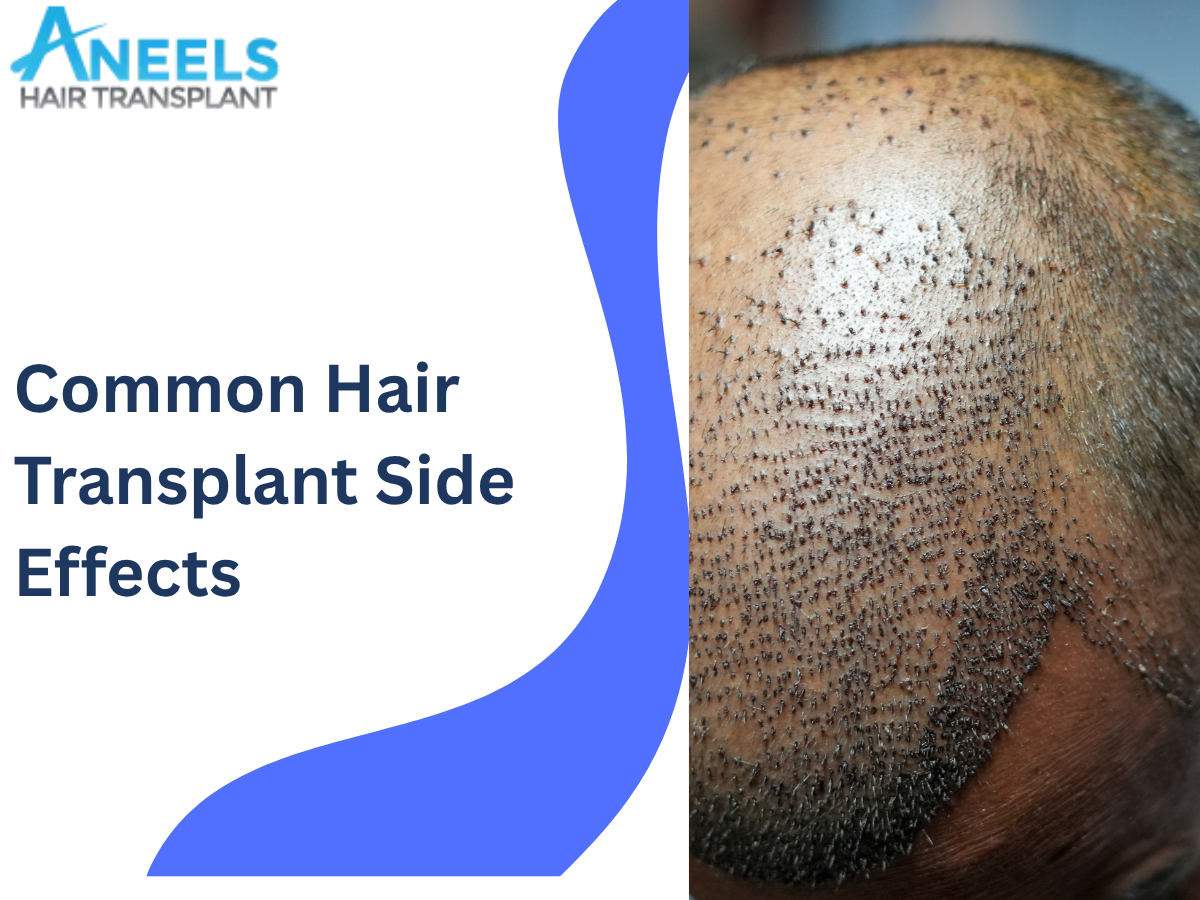
Common Hair Transplant Side Effects (and When to Worry)
Hair transplant surgery is a safe and effective solution for long-term hair restoration. With modern techniques and experienced surgeons, most patients achieve natural-looking results with minimal complications. However, like any medical procedure, there are some common hair transplant side effects that patients should be aware of.
Aneel’s understanding of what is normal and when to worry can help you stay informed, reduce anxiety, and ensure a smooth recovery. At Aneels Hair Transplant, procedures are performed under the supervision of Dr. Aneel Riaz Batalvi (M.B.B.S, M.R.C.S), a Diplomate of the American Board of Hair Restoration Surgery (ABHRS) with over 19 years of experience, following international standards set by the International Society of Hair Restoration Surgery (ISHRS).
Are Hair Transplant Side Effects Normal?
Yes, most side effects after a hair transplant are temporary and part of the normal healing process. The scalp undergoes minor trauma during graft extraction and implantation, which leads to short-term reactions.
The key is to differentiate between:
- Normal side effects that resolve on their own
- Warning signs that require medical attention
Common Hair Transplant Side Effects
1. Swelling of the Scalp and Forehead
Swelling is one of the most common side effects, usually appearing within the first few days after surgery.
What to expect:
- Mild swelling around the forehead or eyes
- Temporary discomfort
How long it lasts:
Typically subsides within 2 to 5 days
How to manage:
- Keep your head elevated while sleeping
- Follow your surgeon’s instructions
2. Redness in the Transplanted Area
Redness occurs due to increased blood flow as the scalp heals.
What to expect:
- Pink or red appearance in the recipient area
- More noticeable in individuals with sensitive skin
Duration:
Usually fades within 1 to 2 weeks
3. Scabbing and Crusting
Tiny scabs form around transplanted grafts as part of the healing process.
What to expect:
- Small crusts around hair follicles
- Gradual shedding of scabs
Duration:
Typically resolves within 7 to 10 days
Important:
Do not pick or scratch scabs, as this can damage grafts.
4. Itching
Itching is a natural sign of healing and skin regeneration.
What to expect:
- Mild to moderate itching in both donor and recipient areas
How to manage:
- Use prescribed sprays or medications
- Avoid scratching the scalp
5. Shock Loss (Temporary Hair Shedding)
Shock loss is one of the most misunderstood side effects.
What happens:
- Transplanted hair sheds within 2 to 4 weeks
- Sometimes existing hair may also shed temporarily
Important note:
This is completely normal. The hair follicles remain intact and will start growing new hair within a few months.
6. Numbness or Reduced Sensation
Some patients may experience temporary numbness in the donor or recipient area.
Why does it happen:
- Minor nerve disruption during the procedure
- Duration:
- Usually improves within weeks to a few months
7. Mild Pain or Discomfort
Pain after a hair transplant is generally minimal.
What to expect:
- Mild soreness or tightness
- Easily managed with prescribed medication
Less Common but Possible Side Effects
While rare, some patients may experience:
1. Infection
Infections are uncommon when proper hygiene and aftercare are followed.
Symptoms include:
- Increased redness
- Pus or discharge
- Fever
2. Folliculitis (Inflamed Hair Follicles)
This condition involves small pimples forming around transplanted hair.
What to expect:
- Red bumps or irritation
- Usually mild and temporary
3. Uneven Hair Growth
Hair may initially grow unevenly as follicles adjust to their new cycle. This usually improves over time.
When Should You Be Concerned?
While most side effects are normal, certain symptoms require immediate attention.
Contact your surgeon if you experience:
- Severe or worsening pain
- Excessive swelling that does not improve
- Persistent bleeding
- Signs of infection (pus, fever, severe redness)
- No hair growth after 5 to 6 months
- Unusual scarring or patchiness
Early medical evaluation ensures that any complications are addressed quickly.
How to Minimize Side Effects
Proper aftercare plays a major role in reducing side effects and improving recovery.
Follow these essential tips:
- Follow all post-operative instructions carefully
- Avoid touching or scratching the scalp
- Wash your hair as directed
- Avoid smoking and alcohol during recovery
- Protect your scalp from sun exposure
- Take prescribed medications on time
At Aneels Hair Transplant, patients receive detailed aftercare guidance to ensure safe healing and optimal results.
Recovery Timeline and Side Effects
Understanding when side effects occur can help set expectations:
- Days 1 to 3: Swelling, redness, mild discomfort
- Week 1: Scabbing and initial healing
- Weeks 2 to 4: Shock loss begins
- Months 3 to 4: New hair growth starts
- Months 9 to 12: Final results become visible
Each stage is a normal part of the recovery process.
Why Choosing the Right Surgeon Matters
Many complications can be avoided by choosing an experienced and qualified hair restoration surgeon.
Dr. Aneel Riaz Batalvi ensures:
- Minimal trauma during surgery
- Proper graft handling
- Accurate placement for natural results
- Comprehensive aftercare support
As an ABHRS Diplomate and a Full Member of the ISHRS since 2011, he follows internationally recognized techniques to minimize risks and deliver consistent outcomes.
Final Comments
Understanding common hair transplant side effects and when to worry is essential for a stress-free recovery. Most side effects, such as swelling, redness, scabbing, and temporary hair shedding, are normal and resolve on their own.
The key is to follow proper aftercare and recognize warning signs that require medical attention. With expert guidance and patience, the recovery process becomes smooth and predictable.


Customer Reviews
Showing 0 reviews
Thanks for submitting your comment!