
Is Hair Transplant Halal? A Guide for Muslim Patients in Pakistan
Is hair transplant halal? Most scholars who have answered the question say yes, when the hair moved is your own, because the surgery restores hair that was lost rather than changing Allah’s creation. The answer changes with the method: synthetic fibres, another person’s hair or a glued hair patch are treated differently. For a Muslim patient, the practical questions matter just as much: wudu, ghusl and sujood in the first days after surgery. This guide sets out the published views and the medical facts, and your own scholar should confirm how they apply to you.
Is hair transplant halal in Islam? What scholars say
The most widely read answer comes from IslamQA, which describes a hair transplant as permissible. It quotes Shaykh Ibn Uthaymin, who treated the procedure as correcting a defect and restoring what was there, not as changing creation. The answer also cites the hadith in Bukhari and Muslim of a bald man whose hair Allah restored.
Hanafi scholars reach a similar conclusion. A Darul Ifta Birmingham fatwa permits a transplant for someone with a genuine need, provided the person uses his own hair, and states that wudu and ghusl remain valid afterwards. On IslamOnline, Sheikh Ahmad Kutty draws the same line between natural and artificial hair. Sheikh Yusuf al-Qaradawi adds a condition: permission is for real need, not for every cosmetic wish.
In practice, an FUE hair transplant in Lahore that moves your own follicles from the back of the scalp is the kind of procedure these answers describe. We do not issue religious rulings, so take these sources to your own scholar.
Is hair transplant haram in any case?
Asking “is hair transplant halal” is really a question about method. The views turn negative when the hair is not your own or does not grow from your scalp, which is also where the question “is hair patch halal” is answered.
| Option | What it is | Scholarly view in the sources above | Wudu and ghusl |
|---|---|---|---|
| Transplant with your own hair | Follicles moved from the back of the scalp to the thinning area | Permissible | Valid after the transplant |
| Synthetic fibre implant | Artificial fibres inserted into the scalp | Impermissible in Sheikh Kutty’s view | Not addressed in these sources |
| Glued hair patch or toupee | A hair unit fixed to the scalp with adhesive | Not permissible in the Birmingham fatwa, treated like a wig | Ghusl not valid while glue stops water reaching the scalp |
The patch ruling rests on a simple point. Ghusl requires water to reach all of the skin, and a glued base blocks it. A second Birmingham fatwa, given to a man wearing a toupee after a failed transplant, reached the same conclusion. Because transplanted hair grows like the rest of your hair, our post on whether a hair transplant is permanent is relevant to anyone weighing a transplant against a patch.
How an FUE hair transplant is done, step by step
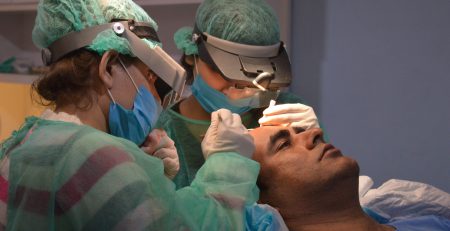
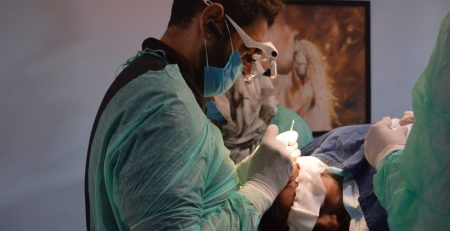
Once the answer to “is hair transplant halal” is settled for you, knowing the steps helps you plan prayer times and wudu around the day. The International Society of Hair Restoration Surgery patient brochure describes a procedure of 3 to 8 hours as minor outpatient surgery. A typical FUE day and recovery run like this:
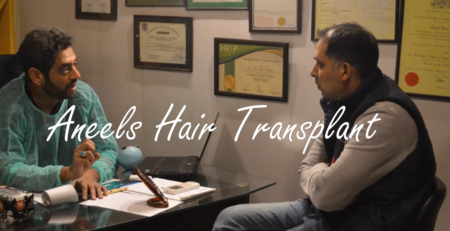
- Consultation: the surgeon checks the donor area, confirms the cause of hair loss, and plans the hairline and graft count.
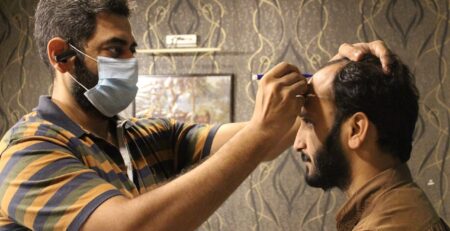
- Preparation: the hairline is marked and the donor area is trimmed.
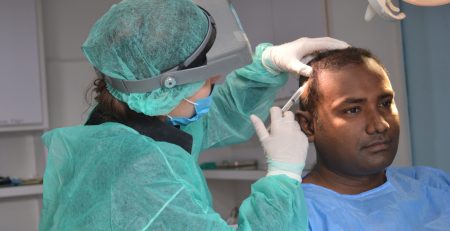
- Numbing: injections numb the donor and recipient areas, and you stay awake.
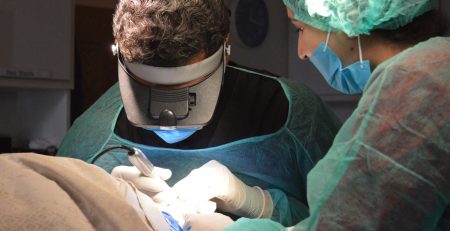
- Extraction: individual follicular units are taken from the back and sides of the scalp. FUE leaves small dot scars that short hair usually covers.
- Recipient sites: tiny incisions are made in the thinning area at the angle the new hair should grow.
- Placement: grafts are placed into the incisions one by one.
- First days: small crusts form on each graft within 24 hours and shed in about 4 to 14 days.
- Growth: grafted hair often starts to grow 10 to 16 weeks after the procedure.
The clinic’s written post-op instructions cover the first days in detail, and the next three sections show where they meet worship.
Wudu after hair transplant: what changes in the first days
Wiping the head (masah) is part of wudu, and that is where the scalp needs care. The clinic asks patients to avoid water splashing on the head for two days. During that time, wiping over the fresh grafts with a wet hand may not be safe.
IslamQA sets out an order for wounds and dressings in wudu. Wash the area if you can. If washing would cause harm, wipe it. If wiping would also cause harm, perform tayammum for that part after completing wudu. Where a dressing covers the area, wiping over the dressing is enough. Ask your surgeon which parts of the scalp can be touched and from which day, then ask your scholar how that medical answer applies to masah.
Ghusl after hair transplant and the first washes
Ghusl needs water to reach the whole body, including the scalp. Once the grafts are secure, the Birmingham fatwa confirms that ghusl after a transplant is valid. The difficulty is only the first few days, when water on the head is restricted.
After that period, the clinic’s washing method is gentle. Shampoo is mixed into a mug of water and poured over the head rather than sprayed from a shower. Our guide to hair washing after a transplant explains the routine. If ghusl becomes obligatory before water is allowed on the head, ask your scholar before the surgery date so you have an answer ready.
Praying after hair transplant: sujood, bending and the prayer cap
Sujood places the head lower than the heart. The clinic’s post-op instructions ask patients not to bend the body so that the head drops below the heart. Keeping the head up limits swelling, which is why the brochure also advises sleeping semi-upright for 2 to 3 days. The brochure adds that some patients notice forehead swelling around the third day after surgery, which settles within 3 to 4 days.
Islamic law has a clear concession for a person who cannot prostrate. A SeekersGuidance answer on praying after surgery explains that the prayer may be performed seated, with a slight nod for bowing and a lower nod for prostration. Do not raise a pillow to the forehead. For how long this applies to you is a medical question for the surgeon, and the method is a question for your scholar.
A prayer cap is fine if it is loose and clean, but avoid a tight topi pressing on the hairline. Heat adds a problem here. In the Pakistan Bureau of Statistics yearbook, Lahore’s long-term normal for May peaks at 38.8°C. Sweat under a cap in a crowded congregation irritates a fresh hairline, so a cooler month makes the first Fridays easier.
Ramadan, Eid and timing your surgery
Pakistan’s 2023 Census recorded 96.35% of the population as Muslim, so for nearly every patient the surgery plan has to fit fasting, Eid and five daily prayers. Medicines after surgery follow a schedule your surgeon sets, and the timing of any medicine during a fasting day is decided by your surgeon at consultation. Whether an injection or tablet affects the fast is a question for your scholar.
Booking outside Ramadan is usually simpler, or early enough that the no-bending period ends before Eid prayers. Our post on the best sleeping position after a hair transplant helps with the first nights, which matter more if you wake for suhoor.
Who is a good candidate, and the risks to weigh
A transplant that fits the scholarly view depends on having your own donor hair. A good candidate has:
- a dense, healthy donor area at the back and sides of the scalp
- hair loss that is diagnosed and reasonably stable
- realistic expectations about density from one session
- no untreated medical condition that would make surgery unsafe
Women who cover their hair can also be candidates for a female hair transplant, where planning differs from male pattern loss.
Avoiding harm is part of the decision, so weigh the risks honestly. The brochure describes significant complications as extremely rare and infection in the donor or recipient area as very uncommon. Minor inflammation around a graft can look like a pimple and usually settles with warm compresses. Numbness in the donor or recipient area usually fades within 2 to 8 months. Careful patient selection, a sterile setting and following the aftercare plan reduce each of these.
What to ask before booking a transplant in Lahore
Check the clinic first. Clinics in Punjab operate under a licence from the Punjab Healthcare Commission, granted under the PHC Act 2010, and a reputable clinic will show it on request. Then ask:
- Will only my own hair be used, with no synthetic fibres?
- Who makes the recipient incisions, and who places the grafts?
- How many grafts are planned, and is that written on the quote?
- What do the post-op instructions say about bending, water on the head and caps?
- When can I return to normal sujood and wudu?
As a market estimate, Lahore clinics charge PKR 70 to PKR 100 per graft, and your exact figure is set at a paid consultation. Bring your questions about prayer to that appointment, so the surgeon can build the dates into your plan.
Why choose Aneels Hair Transplant for Muslim patients in Lahore
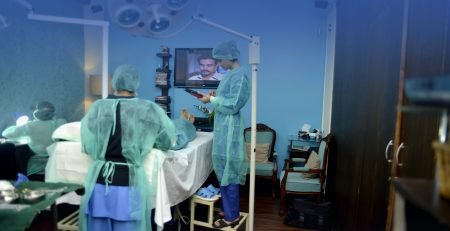
- Awake through the day: the procedure is performed under local anaesthesia, so you stay awake, can use your phone and remain aware of prayer times while the grafts are placed.
- Incisions by the surgeon: Dr. Aneel Riaz Batalvi performs the recipient incisions himself, which keeps the hairline natural under a topi or with short hair.
- Options for women who cover: hairlines are designed for female proportions, and no-shave or partial-shave options keep existing hair in place under a hijab.
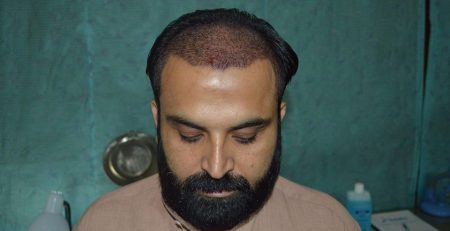
- Results you can see: before and after results show the clinic’s own patients, all treated with their own hair.
Book a consultation to plan your transplant dates around prayer, fasting and family occasions. Call 0341-7555512 or message us on WhatsApp, or visit 32 B Masson Road, behind Ganga Ram Hospital, Lahore.
Frequently Asked Questions
Is a hair transplant a sin if it is done for appearance?
Scholars differ on motive. Many treat restoring lost hair as correcting a defect, which is permitted, while some, such as Sheikh al-Qaradawi, limit permission to genuine need and warn against purely cosmetic surgery. Your intention and situation matter, so discuss your reasons with your own scholar before deciding.
Is a hair transplant halal for women?
The answers reviewed here discuss the procedure itself, and the same principle of using one’s own hair applies. Women often have extra questions about who will see their hair during treatment and how to cover afterwards. Raise both at consultation, and confirm the religious side with a scholar you trust.
Can I wear a topi or hijab after the procedure?
Yes, once the surgeon allows it, but keep it loose. A soft cotton cap or a loosely tied scarf avoids pressure and rubbing on new grafts. Avoid tight bands, pins near the hairline and anything that pulls when you take it off.
Do I need to make up prayers missed on the day of surgery?
In the Hanafi answer cited above, prayers that could have been performed with head gestures, but were not, must be made up. Being awake during the procedure helps you keep track of prayer times. Ask your scholar about combining or making up prayers for your situation before the surgery date.
Does a halal hair transplant cost more in Lahore?
No. There is no religious surcharge, because the transplant itself is the same procedure. The price depends on the number of grafts and the technique. Ask for the graft count and the per-graft rate in writing, and check that the quote confirms only your own hair will be used.
Can I attend Friday prayers in Lahore the week after surgery?
Usually yes, if you can pray seated with gestures for any period when sujood is restricted. Choose a spot where people will not bump your head, wear a loose cap, and avoid sitting in direct sun in the courtyard while the grafts are fresh.