

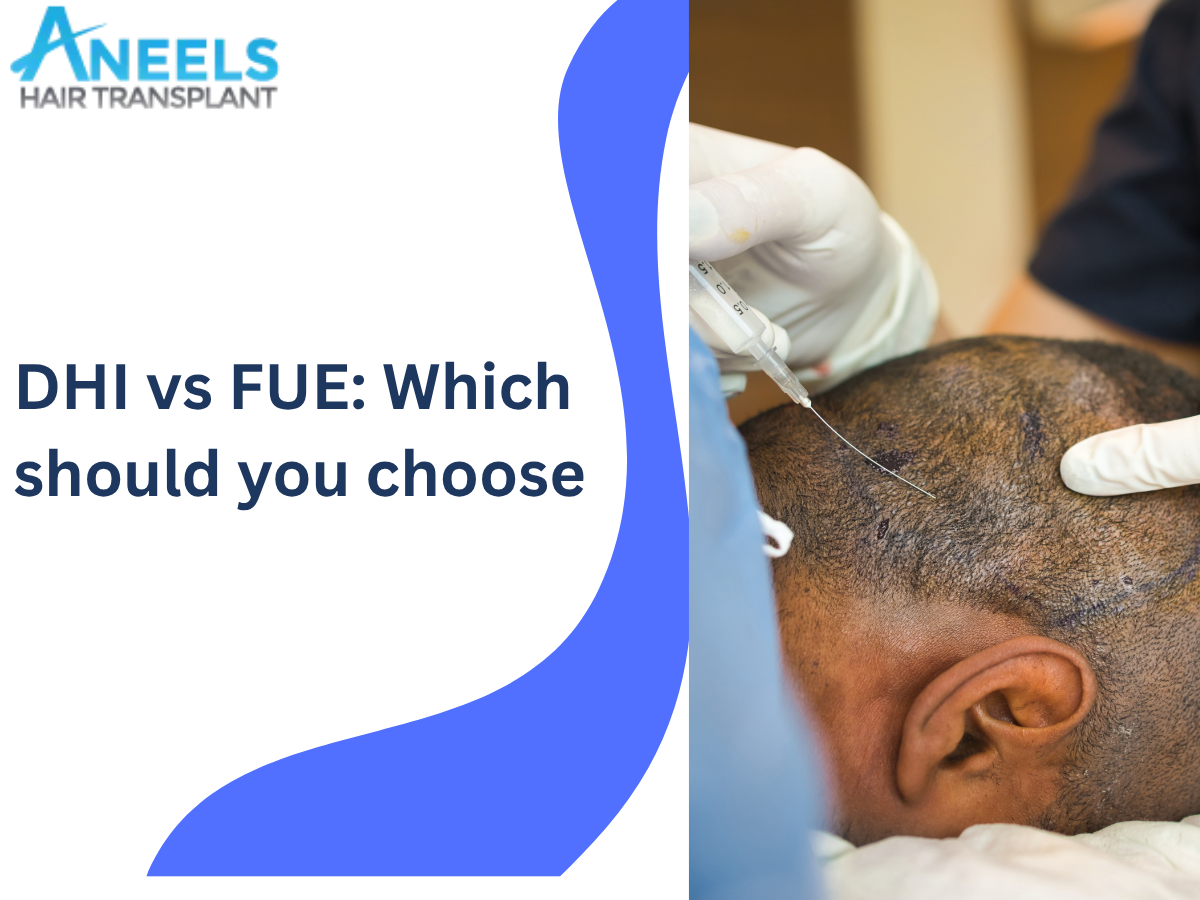
DHI vs FUE: Which Hair Transplant Is Right for You?
If you have been researching hair restoration in Lahore, two terms keep coming up: FUE and DHI. Both are advanced, minimally invasive techniques. Both produce natural results in the right hands. Yet they are not the same procedure, and the differences matter for cost, comfort, recovery, and the final look of your hairline. This guide breaks down how DHI and FUE actually differ, who each method suits best, and how to decide which one is right for you.
What Is FUE Hair Transplant?
FUE, or Follicular Unit Extraction, is the technique most patients in Pakistan are already familiar with. The surgeon uses a fine micro-punch to remove individual follicular units from the donor area, usually the back and sides of the scalp. Tiny channels are then created in the balding zone, and the grafts are placed into those channels one by one.
FUE hair transplant is valued because it leaves no linear scar, suits both men and women, and offers strong, natural results. Variations such as Sapphire FUE refine the technique further by using sapphire blades to open finer recipient sites.
What Is DHI Hair Transplant?
DHI stands for Direct Hair Implantation. It is a refined version of FUE that uses a specialised instrument called the Choi Implanter Pen. The extraction stage is essentially the same as FUE, but the implantation stage is different. Instead of creating recipient channels first and then placing the grafts, the surgeon does both in a single motion: the pen creates the opening and deposits the follicle at the same instant.
This single-step placement is what gives DHI its reputation for fine control over the angle, depth, and density of each follicle.
DHI vs FUE: The Key Differences
On the surface, DHI and FUE share more than they differ. Both extract follicles individually, both use local anaesthesia, both leave minimal scarring, and both produce permanent results when performed by an experienced surgeon. Where they part ways comes down to a handful of practical points.
Implantation method. This is the defining difference. FUE separates channel creation and graft placement into two steps. DHI combines them using the Choi pen. The result is that a DHI surgeon controls the angle and direction of every follicle at the moment it enters the scalp.
Time outside the body. Grafts are most fragile between extraction and placement. Because DHI implants follicles almost immediately after extraction, the time outside the body is shorter, which is associated with strong graft survival.
Shaving. FUE usually requires the recipient and donor areas to be shaved or trimmed. DHI can often be performed without a full shave in suitable cases, which is one reason it is popular for hair transplant for women and for patients who want to return to work discreetly.
Density and precision. DHI is particularly strong for detailed work such as hairline design, eyebrow restoration, and small zones where high density and a natural angle are critical. FUE remains an excellent all-rounder and is often the better choice when very large areas need coverage in a single session.
Procedure time. Because each follicle is loaded into and released from the Choi pen one at a time, DHI tends to take longer per graft than FUE. For larger sessions, this can make FUE the more practical option.
Cost. The specialised tools, longer procedure time, and additional training mean DHI usually costs more than a standard FUE session. You can review current pricing in our breakdown of hair transplant cost and FUE hair transplant cost in Lahore.
Recovery. Both techniques are minimally invasive, and recovery is broadly similar. Most patients return to routine activities within a few days. The full hair transplant recovery timeline follows the same stages for both methods, with early shedding, dormancy, and gradual regrowth over the following months.
Which One Should You Choose?
There is no universal winner. The right method depends on the pattern and extent of your hair loss, the quality of your donor area, your lifestyle, and your goals.
DHI tends to be the stronger choice when
- You want high density in a defined area, such as the hairline or crown
- precise angle and direction matter, for example, in hairline design or eyebrow restoration
- You prefer to avoid a full head shave
- You have early to moderate hair loss with a healthy donor area
- You are restoring small zones around existing native hair, where avoiding damage to surrounding follicles is critical
FUE tends to be the stronger choice when
- You have extensive baldness and need a high graft count in one sitting
- You want a balance of natural results and a more time-efficient session
- Cost is a factor, and you still want a permanent, scar-light result
- Your goal is broad coverage rather than ultra-fine density in a small area
For many patients, the honest answer is that either method will deliver an excellent outcome, and the deciding factor is the experience of the surgeon rather than the label on the procedure.
What About FUT?
It is worth noting that neither DHI nor FUE is the only option. FUT, the strip method, can still be the most efficient route when very large graft numbers are needed. A detailed comparison of FUE and FUT hair transplant is worth reading if you are weighing all three.
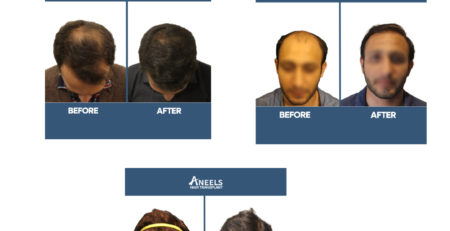
Results: What to Expect
Whichever method you choose, transplanted hair grows in stages. Early shedding is normal in the first weeks, followed by a quieter phase before new growth begins around the third month. Density continues to improve through months six to nine, with the final result visible at around twelve months. Some patients also experience temporary shock loss of native hairs, which typically recovers as the transplanted follicles mature.
Why Choose Aneels Hair Transplant
The instrument matters, but the hand that holds it matters more. At Aneels Hair Transplant in Lahore, every procedure is performed personally by Dr. Aneel Riaz Batalvi (M.B.B.S, M.R.C.S), with more than nineteen years of experience in hair restoration. Dr. Aneel is a Shelly A. Friedman award-winning Diplomate of the American Board of Hair Restoration Surgery (ABHRS) and a Gold Standard certified hair surgeon with the International Society of Hair Restoration Surgery (ISHRS). He is also a founder member of the Association of Hair Restoration Surgeons of Pakistan.
What truly sets our clinic apart is the surgeon’s direct involvement at every stage. Dr. Aneel does not delegate incisions or graft placement to technicians, a practice that is unfortunately common elsewhere. That hands-on commitment is the reason our patients see consistent, natural, and lasting results across both FUE and DHI techniques.
If you are still unsure whether DHI or FUE is the right path for your hair loss, the most reliable next step is a professional assessment. Book a consultation with Aneels Hair Transplant today and let Dr. Aneel design a plan tailored to your hair, your goals, and your lifestyle.



Customer Reviews
Showing 0 reviews
Thanks for submitting your comment!