


What Is DHI Hair Transplant? Benefits, Process & Results
Hair restoration has advanced rapidly over the past decade, and one technique now draws a great deal of attention from patients in Lahore and across Pakistan: DHI, or Direct Hair Implantation. If you have been researching your options, you have probably come across the term alongside FUE and FUT and wondered what actually makes it different. This guide explains what DHI is, how the procedure works, who it suits, and what results you can realistically expect, so you can make an informed decision about your hair restoration journey.
What Is DHI Hair Transplant?
DHI, short for Direct Hair Implantation, is a refined form of the FUE hair transplant method. Like FUE, it involves extracting individual hair follicles from a donor area, usually the back and sides of the scalp, where hair is genetically resistant to thinning. The key difference lies in how those follicles are placed.
In a standard transplant, the surgeon first creates recipient channels in the balding area and then inserts the grafts into those channels as a separate step. DHI merges these two actions into one. Using a specialised instrument, the surgeon creates the recipient site and implants the follicle at the same time. This single-step placement gives DHI its reputation for precision and density, particularly along the hairline.
The Choi Implanter Pen: The Technology Behind DHI
The instrument that defines DHI is the Choi implanter pen, originally developed in South Korea. It is a slim, pen-shaped tool with a fine hollow needle at its tip, available in different diameters to match the size of each follicular unit.
The process is often described as stick-and-place. A loaded graft sits inside the hollow needle. When the surgeon presses the needle into the scalp at a chosen depth, a plunger releases the follicle into position in the same movement. Because the follicle spends very little time outside the body and is handled gently, this approach is associated with strong graft survival and a more controlled, natural growth angle.
How the DHI Procedure Works, Step by Step
While every patient is different, a DHI session generally follows a clear sequence.
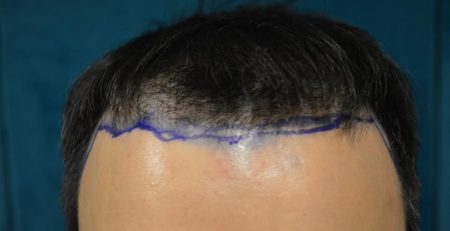
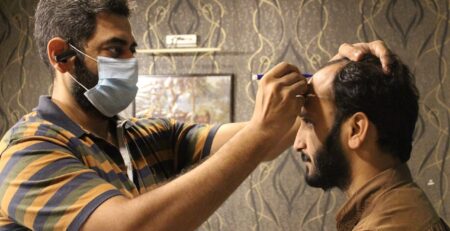
First comes the consultation and planning stage. The surgeon assesses your pattern of hair loss, evaluates the density and quality of your donor area, and designs a hairline suited to your face and age. This step shapes the entire outcome, which is why a careful pre-transplant consultation matters so much.
Next is donor preparation and extraction. The donor area is numbed with local anaesthesia, so you remain awake and comfortable throughout. Individual follicular units are then extracted one by one using a fine micro-punch, which keeps trauma to the scalp low.
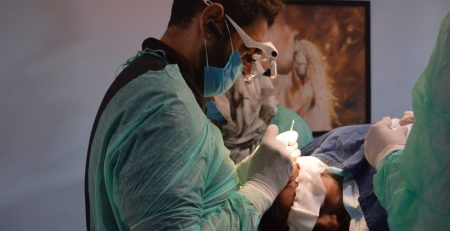
The extracted grafts are then loaded into the Choi pen and implanted directly into the recipient area. The surgeon controls the depth, angle, and direction of every follicle, which is what allows the final result to blend seamlessly with your existing hair.
Finally, you receive detailed aftercare instructions. Following these carefully supports healing and protects your new grafts during the critical early weeks.
DHI vs FUE vs FUT: What Sets It Apart
Understanding how these methods compare helps clarify where DHI fits. You can read a deeper breakdown in our guide on FUE and FUT hair transplants, but here is the short version.
FUT, the strip method, removes a band of scalp from the donor area and is well suited to cases needing a very large number of grafts in one session. It can leave a thin linear scar.
FUE extracts follicles individually and requires the surgeon to create recipient channels before placing the grafts. It leaves minimal, scattered marks rather than a single scar.
DHI uses the same gentle individual extraction as FUE but skips the separate channel-making step, placing each follicle directly with the Choi pen. The trade-off is precision and density against time: DHI is excellent for detailed work and natural hairlines, while FUE or FUT can be more efficient for covering very large bald areas.
Key Benefits of DHI Hair Transplant
Patients are drawn to DHI for several practical reasons:
- High graft survival. Minimal handling and short time outside the body support healthy follicle survival and growth.
- Natural-looking results. Precise control over angle and direction helps the transplanted hair grow in line with your natural pattern.
- Greater density. Direct placement allows follicles to be positioned closely, which is valuable for filling in a thinning hairline.
- No-shave options. In suitable cases, DHI can be performed without fully shaving the head, which many patients, especially women, prefer.
- Minimal scarring and quick recovery. The technique is minimally invasive, with most patients returning to routine activities within a few days.
Who Is a Good Candidate for DHI?
DHI suits a wide range of people, but it is particularly well matched to certain situations. Good candidates typically have localised thinning or a receding hairline, a healthy donor area with sufficient density, and a goal of high, natural-looking density in a defined zone. It is also a strong option for women experiencing hair loss who wish to avoid shaving, and for delicate areas such as the hairline and eyebrows.
For patients with very extensive baldness needing maximum coverage in a single sitting, other methods may sometimes be more time-efficient. The only reliable way to know which technique fits you is a professional assessment with an experienced surgeon.
DHI Results: What to Expect
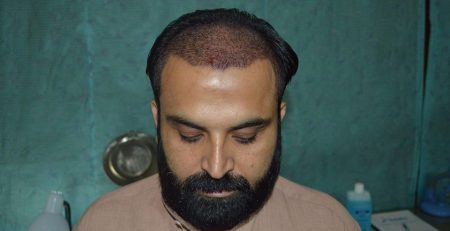
DHI is a permanent solution, because the transplanted follicles are taken from areas resistant to balding. Patience is still required, as hair growth follows a natural cycle. Most patients notice new growth from around three months, with fuller results developing over the following months, and the outcome is visible at about twelve months. For a complete view of each stage, see our hair transplant recovery timeline.
Why Choose Aneels Hair Transplant
The success of any DHI procedure depends far more on the skill of the surgeon than on the tool alone. At Aneels Hair Transplant in Lahore, every surgery is performed personally by Dr. Aneel Riaz Batalvi (M.B.B.S, M.R.C.S), a surgeon with over nineteen years of experience in hair restoration. Dr. Aneel is a Shelly A. Friedman award-winning Diplomate of the American Board of Hair Restoration Surgery (ABHRS) and a Gold Standard certified member of the International Society of Hair Restoration Surgery (ISHRS). He is also a founder member of the Association of Hair Restoration Surgeons of Pakistan.
What sets our clinic apart is simple: Dr. Aneel carries out every incision and placement himself, without delegating the surgery to technicians. That hands-on commitment is what allows us to deliver natural, lasting results that our patients trust.
If you are considering DHI or want to know which technique best suits your hair loss, book a consultation with Aneels Hair Transplant today and take the first confident step toward restoring your hairline.





Customer Reviews
Showing 0 reviews
Thanks for submitting your comment!