
Hair Patch vs Hair Transplant in Pakistan: Cost and Value
In the hair patch vs hair transplant choice, a patch wins on speed and a transplant wins on long-run value. A patch gives a full look on the day it is fitted, but it has to be refitted, cleaned and replaced for as long as you wear it. A transplant moves your own follicles once, and the result takes months to show. The deciding factor is time. How many years will you cover the bald area, and do you have enough donor hair at the back to move?
Hair patch vs hair transplant: which gives better value?
For most people with enough donor hair, a transplant gives better value over several years, because it is paid for once per session and needs no refits. A patch gives better value only over a short period, or for someone who cannot have surgery. If you lean towards surgery, the most common method is FUE (Follicular Unit Extraction). See how an FUE hair transplant in Lahore works, then compare like with like.
Value is not only money. A patch is an ongoing routine, while transplanted hair is simply your hair once it grows. The question is which of those two lives you want to pay for.
What a hair patch is, and how it differs from a wig
A hair patch, also sold as a hair system or unit, is a thin base of lace or polymer carrying human or synthetic hair. It covers a bald area and is held on with clips, tape or a surgical adhesive. A hair wig for men is the larger version: a full cap that covers the whole head. Sellers in Pakistan often call both “non surgical hair replacement”, which is accurate, because nothing is placed under the skin.
A dermatology review of hair camouflage options notes that hand-tied pieces cost more than machine-made ones, and that human hair needs more care than synthetic fibre. Those choices set your running cost before the first fitting. Ask the seller which base, hair type and fixing method your quote assumes.
Side-by-side comparison for patients in Pakistan
| Point of comparison | Hair patch | Hair transplant |
|---|---|---|
| What it is | A cover fixed on top of the scalp | Your own follicles moved to the thin area |
| Time to a full look | The day it is fitted | Months, after an early shedding phase |
| Upkeep | Refits, cleaning, adhesive or tape, replacement pieces | Washing like normal hair; medicine only if advised |
| Cost pattern | Repeats for as long as it is worn | Paid once per session |
| Effect on the scalp | Can irritate skin and stress hair under and around the base | Small dot scars in the donor area that short hair usually covers |
| Exercise, swimming, sleeping | Depends on the fixing method | Normal routine once healed, as your surgeon advises |
| Can it be undone | Yes, it comes off | No, the grafts stay |
| Best suited to | Thin donor hair, very large bald areas, or no wish for surgery | Pattern hair loss with a healthy donor area |
The table shows the real trade. A patch is reversible and instant, and a transplant is permanent and slow. Whichever row matters most to you, such as swimming or never visiting a fitter again, usually decides the choice.
Hair patch side effects and transplant side effects, compared honestly
Patches are not surgery, but they still act on the skin and the hair underneath. Medical reports describe these problems:
- Allergy to fixing tape: a 2008 report described allergic contact dermatitis caused by an acrylate in a wig-fixing tape.
- Pale skin under the adhesive: a 2022 report described a band of lost skin colour that matched the shape of the wig adhesive.
- Hair loss from the system itself: a 2024 case series of six patients described hair loss caused by hair systems, and asked if pulling or pressure was to blame.
- Irritation and pulling: the camouflage review notes that any hairpiece can irritate the scalp, and that its weight can pull on surrounding hair.
A transplant has side effects too. Transplanted hair sheds between two and eight weeks after surgery before it regrows, according to the American Academy of Dermatology. A Pakistani study in the Journal of Cosmetic Dermatology measured scalp sensation after hair transplant surgery and found it duller than in people who had no surgery. If skin reactions are your main worry, a transplant swaps a repeating risk for a one-time one.
Living with each option in Lahore heat, rain and daily routine
Lahore’s normal mean maximum reaches 38.8°C in May, based on Pakistan Meteorological Department normals for 1981 to 2010. The camouflage review notes that human hair pieces are heavier and hotter to wear, while synthetic ones are more prone to heat damage. If you choose a patch, ask how cleaning and refit visits change in summer, and budget for the hot months rather than an average month.
The monsoon adds moisture on top of heat. The same normals give Lahore 190.9 mm of rain in July and 179.4 mm in August. Ask a fitter how your tape or glue holds up through those wet weeks, and what a mid-season refit costs. Transplanted hair has no edge to lift, and once healed it can be washed and dried like the rest of your hair.
Daily routine matters as much as weather. Prayer raises its own question: during wudu, a fixed patch sits between the water and your scalp. Whether that matters is a religious question, so ask a scholar you trust before you commit to years of wearing one.
Who should choose a patch and who should choose a transplant
A transplant needs two things: enough healthy hair at the back and sides, and skin in the thin area that can still grow hair. Someone whose hair is sparse all over may not have enough to move. A patch has no donor limit, which is why it suits very large bald areas and people who will not have surgery.
Three common case types show how the choice usually falls:
- A man in his late twenties, receding hairline, dense donor area: a transplant is usually the better long-run choice, with a plan to protect the hair he still has.
- A man in his fifties, bald crown and top, thin hair at the back: a patch may cover more than his donor area could. Our non-surgical treatments can support the hair he keeps.
- A groom whose wedding is weeks away: transplanted hair will not be ready in time. A patch or another cover bridges the gap, and surgery can follow later.
Our guide to the hair transplant recovery timeline shows how long each stage takes, which helps with timing a switch from a patch.
What a transplant costs in Lahore, and what to ask before switching
A Lahore transplant is usually priced per graft, at an estimated PKR 70 to PKR 100 each. Some clinics sell packages instead, estimated at PKR 90,000 to PKR 250,000. Treat both as guide figures, because your own price is fixed only after a paid consultation counts the grafts you need. Our article on hair transplant cost in Lahore explains what moves that number. To settle hair patch vs hair transplant on cost, add up a full year of patch spending: fittings, tape or glue and replacement pieces. Then set that total against a one-time quote.
Before you switch, ask:
- How many grafts can my donor area safely give, now and in future?
- Will one session cover the area my patch covers, or will I need two?
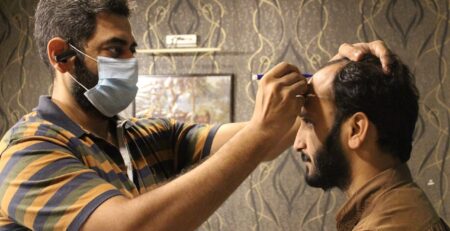
- Who will make the incisions, and who will remove the grafts?
- How long should I stop wearing the patch before surgery, and after?
- What is the plan to protect the native hair I still have?
Take this list to your consultation and ask for the answers on your written plan.
For a wider view of whether the result lasts, see our post on whether a hair transplant is permanent.
Why choose Aneels Hair Transplant for moving from a patch to your own hair
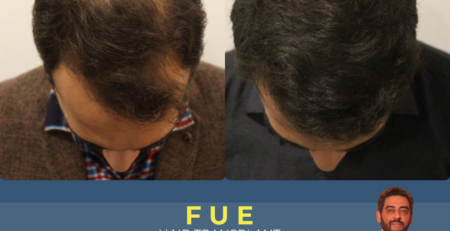
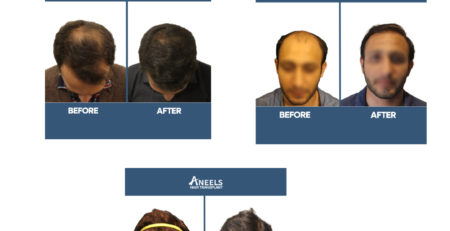
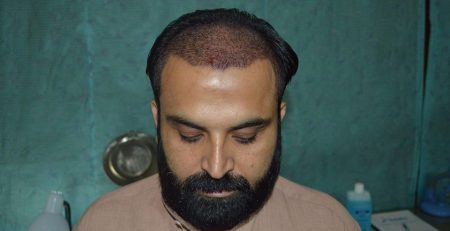
- Growth you can inspect: The results page shows before and after photos and videos of the clinic’s own patients. You see grown hair months after surgery, not a fitting-day look.
- Non-surgical care in the same clinic: PRP (platelet-rich plasma), exosome therapy, laser therapy, hair growth medication, nutritional counselling and scalp micropigmentation are offered. A patch wearer is not pushed into surgery.
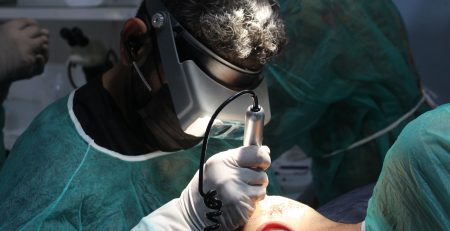
- Awake and comfortable: the procedure is performed under local anaesthesia, and you stay awake and can watch videos or use your phone.
- The right method for your donor area: FUE (Manual, Standard and Sapphire), FUT (Follicular Unit Transplantation) with trichophytic closure, and hybrid FUE plus FUT are all available.
Book a consultation with your patch removed so the surgeon can examine your donor area and give you a graft count. Call 0341-7555512, message us on WhatsApp, or visit 32 B Masson Road, behind Ganga Ram Hospital, Lahore.
Frequently Asked Questions
How long does a hair patch last?
It depends on the base and the hair. A dermatology review puts human hair wigs at about two to three years and synthetic wigs at about three to five years. Bonded hair additions are redone after roughly eight weeks. Daily patches are not covered by these figures, so ask the seller for a written replacement schedule for your exact piece.
Is a hair patch good for your own hair?
A patch does not grow or strengthen the hair under it. A dermatology review notes that clips fixed at the same spot can break the hair there, so changing positions helps. A dermatologist should check any redness or new thinning under the base.
How much does a hair patch cost in Pakistan?
The price varies with the base material, hair type and fixing method, so a single number would mislead you. The fairer figure is the yearly cost: the unit, every refit, the tape or glue, and the replacement pieces you will need. Ask each seller to write that yearly total down before you compare it with a transplant quote.
Can I go to the gym or swim with a hair patch?
Often yes, if the patch is bonded rather than clipped. A dermatology review notes that bonded hair additions are designed to stay on while bathing, sleeping and exercising. Ask your fitter how often a refit is needed if you train or swim most days, and add that to your yearly cost.
Is a transplant cheaper than a patch over the years?
Usually yes for someone with a good donor area, because surgery is paid once per session while a patch keeps costing money. The break-even point depends on your graft count and on how much you spend on the patch each year. Comparing both on a written, multi-year basis gives you the honest answer for your own case.
Should I take my patch off before a consultation in Lahore?
Yes, come with the patch removed, or be ready to take it off in the clinic. The surgeon needs to see the bare scalp to judge the donor area, the size of the bald area and the skin under the base. If the skin is irritated, the surgeon decides at consultation when it is ready for surgery.